Compare that to a standard business card, where ink sits flush against the paper. It's readable, sure, but it doesn't invite touch the way an embossed piece does.
Embossing is one of the most requested finishing techniques for premium marketing materials, from wedding invitations to corporate letterhead. Yet many businesses aren't sure how it works, what it costs, or when it makes sense for a project.
This guide breaks down the definition, techniques, applications, and cost factors behind embossing, so you can decide whether it belongs on your next print job.
Key Takeaways
- Embossing raises text or images above the surface using pressure and dies, not ink
- Techniques range from single-level embossing to combination foil-and-emboss finishes
- Costs stem primarily from custom die creation, not the printing process itself
- Vector artwork and heavier uncoated stock produce the best embossed results
- Best used as an accent element rather than a full-page design treatment
What is Embossing in Printing?
Embossing is a finishing technique that raises text or images above the surface of a material using pressure and often heat, rather than ink. It's applied after printing (or on blank stock) using a specialized die-based process.
Here's how it physically works:
- A male die (raised design) and a female die (recessed mirror image) are custom-made to match the artwork
- The paper or material is placed between the two dies
- Pressure, sometimes combined with heat, forces the material into the recessed die
- The result is a three-dimensional raised impression that holds its shape
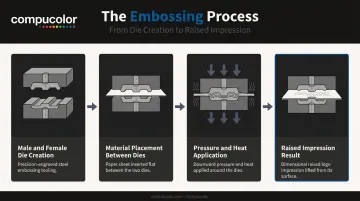
According to the FSEA's Designer's Guide to Foil Stamping & Embossing, this process reshapes the material's fibers rather than adding a printed layer. That's the key distinction from standard printing, which relies entirely on ink transfer to a flat surface.
Blind Embossing vs. Combination Finishes
Blind embossing is the purest form of the technique. No ink, no foil, just raised paper. It's often used on business cards or stationery where subtlety matters more than color.
Embossing can also be combined with foil or ink for added visual impact. This pairs the tactile effect with a metallic sheen or color, common on book covers and premium packaging.
Debossing works in the opposite direction, pressing the design into the material rather than raising it. We'll cover that comparison in more detail shortly.
While paper is the most common substrate, embossing also works on leather, plastic, polycarbonate overlays, cloth, and even sheet metal, though each material requires different tooling and pressure settings.
Types of Embossing Techniques
Not all embossing looks the same. The technique varies based on depth, detail, and whether it's paired with another finish.
Single-Level vs. Multi-Level Embossing
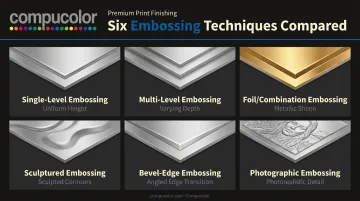
Single-level embossing raises the entire design to one uniform height. It's straightforward, cost-effective, and ideal for simple logos or short text.
Multi-level embossing varies the depth across the design, creating a sculptural, more dimensional effect. Getting this right depends on how well the artwork, die, counter, and paper stock work together during production.
Foil and Combination Embossing
Foil embossing adds a metallic layer directly to the raised area, creating shine along with texture. Combination embossing (sometimes called registered embossing) pairs the raised design with foil or previously printed ink, aligning both elements in a single pass.
You'll see this most often on:
- Hardcover book jackets
- Luxury packaging boxes
- High-end certificates and awards
One documented example: a special-edition playing card box received white, gold, and black foil passes followed by embossing, all within the same production run. This sequenced finishing approach gave the packaging a distinctly premium feel.
Sculptured and Bevel-Edge Embossing
Sculptured embossing uses continuously varying shapes, angles, and curves rather than flat, stepped levels. It's typically achieved with hand-finished or CNC-engraved dies and produces the most realistic detail—think detailed portraits or intricate crests.
Bevel-edge embossing refers to the sloped shoulder connecting the raised image to the base sheet. That angled edge creates a sharper, more dramatic visual transition and can also protect the stock from cracking under pressure.
Image (Photographic) Embossing
This technique converts a photograph's light and dark pixels into raised and recessed areas, building a 3D interpretation of the image. It's a more specialized die-making workflow than standard logo embossing, since depth levels must be mapped from the image itself.
Die material matters here too. According to UEmboss's technical guidance on die materials:
- Brass supports fine lines, greater depth, and long service life, making it the go-to for detailed or sculptured work
- Magnesium is faster and more economical, suited to simpler designs or shorter runs
- Hardened steel dies are reserved for industrial-grade sheet metal embossing, not typical paper finishing
Choosing the right die material affects both quality and cost, so it's worth discussing with your printing partner before finalizing artwork.
Embossing vs. Debossing vs. Regular Printing
These three terms get confused often, so let's separate them clearly.
| Technique | Effect on Material | Best For |
|---|---|---|
| Embossing | Raises design above surface | Tactile accents, logos, borders |
| Debossing | Presses design into surface | Subtle branding, minimalist looks |
| Regular Printing | Applies ink to flat surface | Full-color imagery, text-heavy pages |
Regular printing (offset or digital) applies ink without changing the material's shape, unlike embossing and debossing, which physically reshape it in opposite directions.
One practical note: embossing and debossing both physically deform the material on both sides. How visible that impression remains on the reverse depends on more than which technique you chose:
- Depth of the impression
- Stock thickness
- Construction of the piece
If a piece needs both sides to stay clean and usable, such as the inside of a folder or booklet, test a sample before committing to a depth setting.
Choosing the right technique depends on what the piece needs to communicate. For full-color imagery and text-heavy pieces, regular printing remains the practical default. Embossing and debossing work better as accents: logos, borders, monograms, or short headlines, where tactile impact outweighs color coverage.
Applications of Embossing in Business and Marketing Materials
Embossing shows up most often on materials where first impressions carry weight.
Common applications include:
- Business cards and letterhead
- Wedding and event invitations
- Certificates and awards
- Book and report covers
- Premium packaging and presentation folders
An embossed logo on letterhead or a direct mail folder does more than look nice. It signals that a company invested in the details, which shapes how recipients perceive the brand before they even read the content.
There's supporting evidence for physical mail's impact more broadly. A Canada Post neuromarketing study involving 270 participants found that physical mail required 21% less cognitive effort to process than digital media.
The same study also found physical mail produced 75% brand recall, compared to just 44% for digital ads.
The study measured physical mail against digital advertising generally, not embossed pieces specifically. Still, it underscores why tangible, well-crafted print materials earn attention in a mostly digital world.
This is where working with a full-service printer pays off. Compucolor's creative team and variable data printing capabilities allow embossed elements to be planned as part of a larger direct mail or brand campaign, rather than treated as an isolated add-on. That coordination matters when you're trying to create a consistent, high-end impression across multiple touchpoints.
Beyond paper, that same attention to detail carries over to other materials. Embossing also appears on leather portfolios, plastic membership cards, and metal plaques—useful to know if your project extends past standard print collateral.
Is Embossing Expensive? Understanding the Cost Factors
Embossing costs more than standard printing, primarily because of one upfront investment: the custom die.
Here's what drives that cost:
- Die complexity – A simple logo costs less to tool than a detailed multi-level or sculptured design
- Die material – Magnesium is more economical for short runs; brass costs more but handles fine detail and lasts longer
- Paper or material weight – Heavier, higher-quality stock can affect achievable depth and die durability
- Run quantity – Cost per unit drops significantly at higher volumes since the die is a one-time expense
- Combination finishes – Adding foil or registering the emboss to existing ink requires extra setup and precision
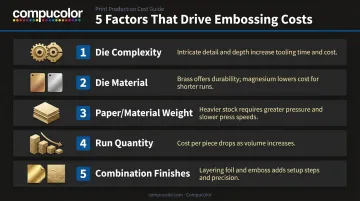
Because so many variables affect final pricing, request a job-specific quote rather than relying on generic price ranges you might find online.
Working with an established printer that offers transparent, accurate quoting helps avoid budget surprises, especially costly reprints caused by die revisions after production has already started. Compucolor's team reviews design files upfront to flag potential issues before they turn into delays.
Design Tips for Successful Embossed Print Pieces
Getting embossing right starts well before the piece hits the press.
Start with vector artwork: vector files translate cleanly into a die at any size, avoiding the pixelation issues that can occur with raster images. High-resolution bitmap art may work in some cases, but vector remains the safer choice.
Keep the design simple and bold: logos, initials, and short text work better than intricate, heavily shaded artwork. Embossing performs best as an accent, not a full-page treatment.
Choose heavier, uncoated stock: thicker, softer paper holds the raised impression better and creates stronger tactile contrast. Coated and textured stocks can be embossed too, but they typically require testing first.
Specify your embossing type clearly: note whether you want single-level, multi-level, sculptured, blind, or registered embossing. Each requires different die instructions.
Request a proof for complex jobs: if your design involves deep relief, fine detail, or registration to foil or ink, a production proof catches issues before a full run commits.
Bringing Compucolor's in-house design team into the process early, rather than after files are finalized, saves both time and money on complex embossing jobs.
Frequently Asked Questions
What is embossing printing?
Embossing is a die-pressed finishing technique that raises images or text above the surface of paper or other materials using pressure and often heat, without relying on ink.
What is the difference between embossing and printing?
Standard printing applies ink to a flat surface to create an image. Embossing uses matched dies and pressure to physically raise the material, creating a tactile, three-dimensional effect instead.
Is embossing printing expensive?
Embossing costs more than flat printing mainly due to custom die creation. Per-unit costs drop as run quantity increases, and simpler designs cost less to tool than complex multi-level dies.
What is the difference between embossing and debossing?
Embossing raises the design above the material's surface, while debossing presses it inward. Both create a tactile effect, just in opposite directions.
Can embossing be combined with foil stamping?
Yes. Combination or registered embossing pairs a raised design with foil or ink applied in alignment, a technique commonly used on book covers and premium corporate marketing materials.
What materials can be embossed besides paper?
Leather, plastic, polycarbonate overlays, cloth, and metal can all be embossed with appropriate tooling. Paper remains the most common choice due to its cost and versatility.